

Back to Current Portfolio

TETRANITE®: Optimization of a Novel Organic-Mineral Bone Adhesive for Dental Bone Grafting

Details

Current Phase
Phase 5 - Clinical Development: 
Preparation
Tissue Addressed
Bone
Technology Type
Combination (device/ drug)
Regulatory Path
IDE

Clinical Need

Based on market research conducted by RevBio, almost half the patients that seek a dental implant supported crown suffer from chronic edentulism and require extensive bone grafting to rebuild their alveolar ridge. Over 30% of the time, these grafting procedures achieve suboptimal results and require some form of revision surgery, adding to the overall cost, treatment time, and morbidity for these patients.

Solution

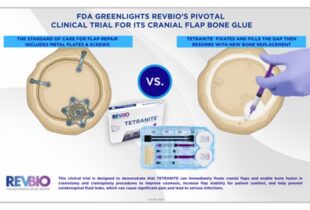
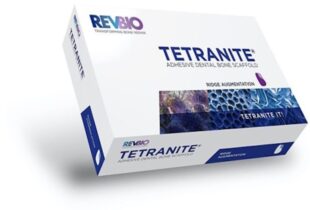
RevBio has developed Tetranite® Adhesive Dental Bone Scaffold (TN-ADBS), a synthetic, porous, cohesive organic-mineral bone scaffold with adhesive properties that resorbs and is replaced by bone on a timescale commensurate with existing graft materials but does not require ancillary fixation or containment devices.

Competitive Advantage

Currently available particulate bone grafting products require significant surgical skill to apply. In contrast, TN-ADBS is both cohesive and adhesive which makes it easy to use. The product will reduce the overall time necessary to perform ridge augmentation procedures, better maintain graft volume over time, and minimize the need for re-grafting.

ITP Support

The project entered the ITP program in 2018, enabling RevBio to initiate the dental bone grafting project. Through the program, RevBio accomplished key marketing milestones, including market surveys to validate clinical need and the lack of any known competitive products with a comparable clinical value proposition. The Quality Assurance Core aided in performing a supplier quality audit for animal study, and the program helped recruit influential surgeons for validation studies. The Resource Center and its internal resources have been critical in advancing the development of this high-potential product.

Achievements

  • RevBio recently received an IDE approval to initiate a first-in-human study for the 3-wall socket reconstruction indication
  • RevBio received NIH Phase II funding from NIH NIDCR in 2023 to conduct pivotal animal studies.

Regulatory Path

  • Device-led combination product

Opportunities for Partnerships

  • Distribution of the product: Strong industry distribution partner that can represent the product globally
  • Investment opportunity: Currently seeking Series A financing of $20M to initiate multiple clinical studies

Key Publications & Patents

  • Fiorellini et al. An Organic Mineral Adhesive Bone Graft: A Preclinical Study. Int J Oral Maxillofac Implants 2025
  • Kesseli et al. Identification of a Calcium Phosphoserine Coordination Network in an Adhesive Organo-Apatitic Bone Cement System. Acta Biomater 2020
  • Kirillova et al. Bioinspired Mineral–Organic Bioresorbable Bone Adhesive. Adv Healthc Mater 2018
  • US8,232,327 Tetra Calcium Phosphate Based Organophosphorus Compositions and Methods
  • US8,765,189 Organophosphorous & Multivalent Metal Compound Compositions and Methods

Meet the Team

Joseph Fiorellini, DMD, DMedSc

Chairman, Dental Advisory Board, RevBio

Joseph Fiorellini, DMD, DMedSc

Chairman, Dental Advisory Board, RevBio

Dr. Fiorellini joined Penn Dental Medicine in 2005, serving as Chair of the Department through June 2015. Prior to joining Penn Dental Medicine, Dr. Fiorellini was at Harvard School of Dental Medicine, where he served as Vice Chair and Associate Professor of the Department of Oral Medicine, Infection and Immunity; Head of the Division of Periodontology; and Program Director of Periodontology. Throughout his tenure at Harvard, Dr. Fiorellini also maintained a private practice in periodontics and implant dentistry. His areas of research include the relationship of genetics and periodontal disease and studies related to periodontal regeneration and implantology. Dr. Fiorellini currently serves on the editorial boards of the Journal of Periodontology, the International Journal of Oral and Maxillofacial Implants and the International Journal of Periodontics and Restorative Dentistry. He has authored more than 50 manuscripts, reviews, and textbook chapters, and his research awards have included National Institutes of Health and International Association of Dental Research travel grants, The American Academy of Periodontology Young Investigators Award, The Academy of Osseointegration Research Award, and The European Association for Osseointegration Research Prize. He was also the recipient of the 2005 E. Bud Tarrson Research Award in Oral Plastic Surgery from the American Academy of Periodontology Foundation.

George Kay, DMD

CSO, RevBio

George Kay, DMD

CSO, RevBio

George has been a teaching clinical faculty member at Harvard School of Dental Medicine for over 35 years, most recently teaching in the Advanced Graduate Prosthodontics and Periodontology programs. He has been involved in both clinical and basic science research in material science and dental implants and is an inventor with several patents to his credit. He is a Prosthodontist, a Diplomate of the American Board of Implant Dentistry and has lectured extensively on bone grafting and implants in the USA and abroad. He has authored many articles as well contributing two book chapters in the field of regenerative procedures and materials. Dr. Kay holds an Sc.B., with Honors, in Biochemistry from Brown University (1976), and D.M.D., Cum Laude, (1980) and M.M.Sc. in Oral Biology (1984) from Harvard University. He has been a recipient of multiple Awards and Honors, including the Individual National Research Service Award, Norman B. Nesbitt Award, Stanley D. Tylman Award, and the Harvard School of Dental Medicine Outstanding Faculty Award.

Brian Hess, MBA

CEO, RevBio

Brian Hess, MBA

CEO, RevBio

Brian founded RevBio in 2014 with the goal of commercializing TETRANITE®, a regenerative bone adhesive with 10 patents. The game changing biomaterial platform promises to transform bone repair across a body of human and animal indications. Brian previously co-invented this technology while at Stryker Corporation where he received the 2010 Innovator of the Year Award for this novel invention. During his tenure at Stryker, Brian also developed and launched HydroSet™, a commercially successful synthetic bone substitute, which is a key predicate to RevBio’s TETRANITE technology. Prior to founding RevBio, Brian was the Chief Technology Officer at InVivo Therapeutics where he led the R&D organization which developed a class III biomaterial that gained FDA approval (to evaluate its use in clinical trials for treating patients with traumatic spinal cord injury). Brian is co-inventor and holder of 15 patents. He received his BS in Mechanical Engineering from the UW-Madison and his MBA from the MIT Sloan School of Management.

Grayson Allen, MBA

CFO/ COO, RevBio

Grayson Allen, MBA

CFO/ COO, RevBio

Grayson has served as the Chief Financial Officer at AeroSat Corporation, North American Industries, and, most recently, has served as an interim CFO for multiple organizations as an Engagement Partner with Tatum, a management consulting firm. His past interim CFO engagements include working with several diagnostics, medical device, and healthcare companies. He has over sixteen years of experience in providing strategic financial leadership, creating and managing finance teams, implementing the infrastructure and processes necessary for rapid growth and expansion, and has raised over $120 million in cumulative investment capital during his career to date. Grayson also has previous venture capital experience and received his BA from Dartmouth College and his MBA from the MIT Sloan School of Management.

Rahul Jadia, PhD

R&D Manager, RevBio

Rahul Jadia, PhD

R&D Manager, RevBio

Dr. Rahul Jadia has over a decade of experience in research and development and currently serves as R&D Manager, Technology Development at RevBio, Inc. His work focuses on the development and translational advancement of Tetranite® (TN), a synthetic, injectable, self-setting, regenerative adhesive biomaterial for dental, cranial, and orthopedic applications. For dental indications, Dr. Jadia has led formulation development efforts for Tetranite designed to promote bone regeneration in resorbed alveolar ridges, enabling subsequent placement of dental implants for functional restoration of dentition. This work has been conducted primarily through grants awarded to RevBio by the Michigan-Pittsburgh-Wyss Regenerative Medicine Center (MPWRMC), a research consortium funded by the National Institute of Dental and Craniofacial Research (NIDCR). Dr. Jadia has also served as Principal Investigator on multiple
Small Business Innovation Research (SBIR) grants funded by NIDCR. He received his
undergraduate degree in Chemistry from the Institute of Chemical Technology, and his M.S. and Ph.D. in Biomedical Engineering from the University of Massachusetts Lowell.

Interviews with the Team

George W Kay, DMD | CSO, RevBio

How did you get into/ what drew you to this field/ role?

I have been attracted to Nature and Science from childhood, observing fish in aquaria at home as a small child and playing with my chemistry set as a pre-teen and conducting more serious experiments through the high school years. The excitement and the joy lay in the discovery of something that I did not know before. As a Bachelor of Science in biochemistry graduate from college, I had a hard choice between a scientific career and a clinical career. I chose dentistry, a clinical discipline involving healing of the sick, responsibility for someone’s health and comfort, close interpersonal relationships, solving problems, working with one’s hands, and applying the knowledge and understanding gained through study of the body, biology, chemistry, and physics. I knew dentistry well already, because my mother was a dentist, and I was drawn into the field as I assisted her during my vacations and chatted at the dinner table.

What excites you about your work?

My current position as the CSO of a biotechnology company is the culmination and an integration of both being a clinician and one exploring at the edge of knowledge. I am the IP on several exciting projects that hopefully will lead to improved health outcomes for many. Being responsible for the design and execution of these and realizing the potential implications of positive results is exciting.

I am an inventor listed on more than half a dozen pending patents which will hopefully lead to a dozen or more significant improvements to the art and science of regenerative medicine. Life is exciting because it is meaningful.

What advice would you give to those who are considering getting involved in translational research/ product development?

First of all, learn the fundamentals, and never abandon basing your ideas on these fundamentals. Do not cut intellectual corners. Look for the unexpected because that is where the discovery lies. Be thirsty for understanding and think critically. If the data do not agree with the expectations, you might have discovered something new, or you need to fix your method. In either case, it is a call to action. Learn from every opportunity.

Make sure that what you choose as a career makes your juices flow, that you are truly passionate and excited by it.

Choose as mentor one who is successful in the field that interests you, whom you respect, and who respects you and is willing to share with you.

Do not be afraid to explore new areas of knowledge, new disciplines, and interdisciplinary spaces. These are the places where you are likely to learn much, discover more, and contribute most.

If you weren’t in your current career, what other profession would you like to try?

I have a feeling that I would be happiest as an explorer of some sort, in any and every parallel universe to this. It may be in any other field of discovery – the world of science is infinite. It lies at the edge of the known with the vast unknown beyond.

Watch on YouTube: “ITP Interview: Rahul Jadia Revbio”
Rahul Jadia, PhD | R&D Manager, RevBio

Story

RevBio’s Tetranite® : Redefining Bone Repair and Regeneration Through Groundbreaking Bioadhesive Innovation

RevBio is a science and engineering start-up focused on solving the unmet clinical need for a biomimetic bone adhesive that can be used to augment bone ridges.


The solution, Tetranite®, is a cohesive, injectable, and self-setting material that can be applied in wet surgical environments. It does not get washed away during the application process, then hardens within minutes to create adhesive bonds to surrounding bone in the shape of a bone ridge as it cures. As part of the MPWRM Resource Center (RC), RevBio is exploring these robust characteristics of Tetranite to enhance oral bone regeneration in challenging situations where conventional particulate or block grafts have been ineffective or unpredictable, at best.

The development of Tetranite was already in progress for other indications when the project entered the ITP program in 2018 with a focus on its development for dental bone grafting applications. Through market research of their own, the RevBio team learned that 70% of all patients who receive dental implants require some form of bone grafting prior to implant placement, yet most dentists remain dissatisfied with existing bone graft products – especially in non-space making defects – due to their challenging handling properties. As most products lack structural integrity, they typically require the use of fixation or containment devices to stabilize the graft and membranes to prevent ingrowth of fibrous tissue that impedes bone regeneration and remodeling. The application of Tetranite with its distinctive adhesive properties is expected to obviate the need for these devices, making the procedure less technique sensitive with more predictable outcomes.

With the RC’s Market Assessment Core, the team conducted rounds of interviews with clinical and industry experts in the dental bone grafting space. From these discussions, the RevBio team gained a deeper understanding of the challenges in dental bone grafting and the associated market dynamics, including the limitations of competitive products and their pricing. With the learnings, the team continued to hone their target indication, where the unique properties of Tetranite can best be leveraged and its value optimized. The Market Assessment Core also provided the team with market data related to specific indications as well as bone graft types and projected growth opportunities in the market.

Initial studies conducted in the ITP program allowed the formulation to be fine-tuned, material characterized, and proof-of-concept efficacy studies to be completed. With this formulation, the project proceeded with a GLP preclinical study using a model discussed with the FDA in a pre-submission meeting. Due to the unique preclinical model, the GLP facility and vendor was selected in collaboration with the RC’s Regulatory and Quality Assurance Cores and the selected facility was pre-qualified by the Quality Assurance leads of RevBio and the RC’s Quality Assurance Core. As this study got underway, issues with the preclinical model emerged. Upon an in-depth review of the complications with the RC’s Regulatory and Market Assessment Cores and clinical experts, the study model was thoughtfully re-designed. With support from the RC, the team successfully obtained concurrence from the FDA that the revised model would be appropriate for the GLP preclinical study.

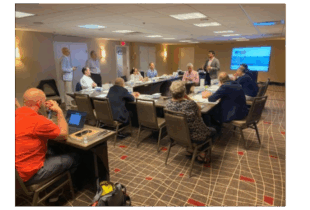
The RevBio team also conducted material characterization and biocompatibility testing, and developed a unique sterile packaging for the product. To refine the prototype, the RC helped organize several user validation and human factor engineering tests, including in-person user handling trials. In collaboration with the RC Market Assessment Core, the team developed plans and recruited >10 clinicians to participate in its in-person user handling trials, leveraging co-timing with professional meetings where many of these key opinion leaders (KOL) clinicians were in attendance. The practitioners were brought together, and provided with the RevBio prototype in its packaging, where they had first-hand experience using it in a simulated clinical environment. The team received valuable feedback from the clinician participants, which resulted in changes to the kit design and reduction of the packaging footprint, as well as many good ideas regarding education and training that will drive broader clinical adoption.

Overall, the Resource Center and its internal resources have played an important role in advancing the development of this high-potential product.

RevBio continues to push boundaries and explore multiple indications for Tetranite. The product is in clinical stages for implant stabilization, cranial flap fixation, and veterinary use. For its bone indications, the team also conducted an in vivo experiment to study Tetranite’s ability to regenerate bone in microgravity conditions — on the International Space Station (ISS). In fact, this is Tetranite’s second trip to space, following a previous in vitro experiment. Sponsored by the ISS National Laboratory, Tetranite was launched on SpaceX’s 26th Commercial Resupply Services (SpaceX CRS-26) mission, where the microgravity in space is used to simulate conditions where bone growth and regeneration is compromised.

In addition to the support from the MPWRM Resource Center and the National Institute of Dental and Craniofacial Research, RevBio has garnered significant federal grant funding from several other institutes of NIH, including National Institute on Aging and the National Institute of Neurological Disorders and Stroke. They have also been successful during several rounds of fundraising. The team is results-driven and has taken full advantage of the RC expertise in designing pre-clinical studies, handling sessions, regulatory strategies, and quality oversight, moving quickly towards their first-in-human studies. For the dental bone grafting indication, the team is striving towards an IDE submission in late 2024.