Back to Current Portfolio

Targeted Remineralization Treatment Using Mineral Loaded Starch Nanoparticles

Details

Current Phase
Phase 5 - Clinical Development: 
Preparation
Tissue Addressed
Teeth/ Dental Pulp
Technology Type
Device
Regulatory Path
Class 1, 510(k), Monograph, De Novo

Clinical Need

Dental caries is the most prevalent chronic disease worldwide, with an unmet need for non-invasive treatment through subsurface remineralization of enamel, as current fluoride toothpastes and varnishes only superficially repair caries lesions. GreenMark Biomedical’s professional-use and direct-to-consumer products address both dental hypersensitivity and early-stage caries, helping to reduce discomfort, preserve enamel, and improve oral health.

Solution

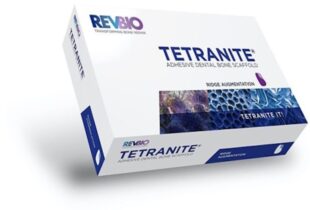
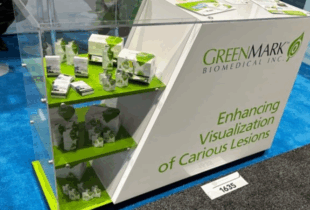
We have developed tiny positively charged, mineral-loaded starch particles that target negatively charged subsurfaces within enamel and dentin to deliver bioactive ions where needed. As the starch naturally degrades, hydroxyapatite crystals form in situ, occluding dentinal tubules and filling enamel porosities. Our CrystLCare™ Biorestorative, Fluoride-Free and Fluoride-Plus dissolvable dental strips release these targeted particles when placed onto teeth as an easy-to-use treatment approach.

Competitive Advantage

Conventional fluoride products merely seal the outer surface of enamel. In contrast, our targeted subsurface approach enables true regeneration of tooth mineral structure, providing non-surgical treatment of early-stage caries and long-lasting relief from sensitivity. By concentrating bioactive minerals and fluoride where needed, our system promotes total remineralization and superior enamel repair.

ITP Support

This project entered the ITP program in 2018, shortly after GreenMark Biomedical’s founding in 2016. With early concepts based on targeted illumination with the companion LumiCare™ caries detection product, the TRC has been instrumental in advancing our CrystLCare™ technology from proof-of-concept to commercialization. Support from the TRC enabled validation of treatment performance and safety, implementation of medical device requirements and operations, and manufacturing scale-up under a Quality Management System. Through this program, GreenMark demonstrated pre-clinical efficacy for non-invasive treatment of caries and tooth sensitivity, established Device Master Records, and advanced CrystLCare™ Biorestorative, Fluoride-Free and Fluoride-Plus product formulations toward market readiness.

Achievements

  • Developed full suite of CrystLCare™ products/ built broad global patent portfolio
  • Scaled manufacturing to 100,000 doses, with orders for 300,000+ since launch
  • Clinical study protocol developed and ready to kick-off

Regulatory Path

  • CrystLCare™ Biorestorative, Fluoride-Free (CC FF): Class I Medical Device, FDA-registered (Q2 2023) 
  • CrystLCare™ Biorestorative, Fluoride Plus Pro (CC FP Pro): 510(k) clearance for sensitivity treatment (Q1 2025), 510(k) submission for enamel regeneration (Q4 2025) 
  • OTC product launch (Q2 2026) 

Opportunities for Partnerships

Seeking strategic partnership with global dental supply companies and distributors / raising $5M Series A

Key Publications & Patents

Meet the Team

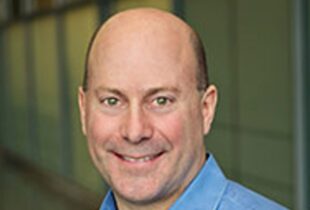
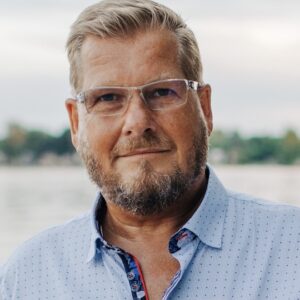
Steven Bloembergen, PhD

Chairman & CEO, GreenMark Biomedical

Steven Bloembergen, PhD

Chairman & CEO, GreenMark Biomedical

Dr. Steven Bloembergen founded GreenMark Biomedical in Michigan in 2016, with a vision to deliver health-based benefits to society through biobased targeting technologies. GreenMark’s mission is to “Enable oral healthcare professionals to preserve teeth through early diagnosis and treatment”. Steven has over 30 years of leadership experience in the development and commercialization of biomaterials. He started a company called EcoSynthetix (ECO) in Lansing, Michigan in 1996, now a global corporation. He and his team built a manufacturing capacity for starch nanoparticles in excess of 200 million lbs/yr at production sites in the US and Europe. The company held its IPO in August 2011 (TSX: ECO) and was Canada’s largest IPO in the Cleantech sector. Steven received the Ernst and Young “2012 Entrepreneur of the Year Award”. He developed a broad global IP portfolio and established a network of university collaborators, including the use of starch nanoparticles for dental and medical applications, which resulted in the foundational technology for GreenMark. Steven is the inventor of over 25 patent families related to biomaterials. He received his Ph.D. in Polymer Science and Engineering from the University of Waterloo, Ontario.

Wendy Bloembergen, MD, MS

VP Clinical Affairs, GreenMark Biomedical

Wendy Bloembergen, MD, MS

VP Clinical Affairs, GreenMark Biomedical

Wendy Bloembergen, MD, MSc is a physician-scientist with a background in internal medicine and nephrology and over nine years of experience in translational oral health innovation. She currently serves as Vice President of Clinical Development at GreenMark Biomedical, an NIH-supported dental biotechnology company developing novel technologies for early caries disease detection and treatment.

Dr. Bloembergen has played a key role in advancing products based on the proprietary GreenMark starch nanoparticle platform from bench to clinic. Her work spans clinical and translational research strategy, regulatory pathway development, evidence generation, clinical study design, NIH SBIR and cooperative agreement funding as well as product position, marketing and business support.

Previously, Dr. Bloembergen held a faculty appointment at the University of Michigan Medical Center, where she conducted outcomes research in end-stage renal disease and provided clinical care in nephrology. She received her MD from the University of Western Ontario (UWO) and completed residency training in Internal Medicine and Nephrology at McMaster University and UWO respectively.  She subsequently completed a research fellowship at the University of Michigan Medical School and earned an MS in Clinical Research Design and Statistical Analysis from the University of Michigan School of Public Health. Her new passion is to improve oral and consequently systemic health by advancing safe, non-invasive, preventive, and accessible alternatives to traditional restorative dentistry.

Nathan Jones, PhD

VP Technology, GreenMark Biomedical

Nathan Jones, PhD

VP Technology, GreenMark Biomedical

Dr. Nathan Jones holds an Honors Nanotechnology Engineering (Co-op) degree from the University of Waterloo (UW) and the Waterloo Institute of Nanotechnology (WIN) and earned his M.S. and Ph.D. in Macromolecular Science and Engineering from the University of Michigan (UM), completing his doctoral training in September 2017. His dissertation, “Harnessing Functionalized Polysaccharides for Medical and Dental Applications,” laid the foundation for translational dental and medical technologies based on functionalized starch nanoparticles.

During his doctoral work, Dr. Jones collaborated closely with advisors Prof. Joerg Lahann (Chemical Engineering, UM) and Prof. Brian Clarkson (Department of Cariology, Restorative Sciences, and Endodontics, UM School of Dentistry). These collaborations led to the invention of GreenMark Biomedical’s targeted dental technologies, for which they are co-inventors.

Dr. Jones has collaborated with GreenMark’s CEO, Dr. Steven Bloembergen, since 2009, spanning roles in industry and as a research student at EcoSynthetix, UW, and UM. He has played a central role in GreenMark’s formation and growth, contributing to technology translation, strategic planning, regulatory positioning, and commercialization execution. Following postdoctoral training in cariology research with Prof. Carlos Gonzàlez-Cabezas (UM-SOD), Dr. Jones joined GreenMark full-time in May 2018. He has since led the development and commercialization of GreenMark’s LumiCare™ Rinse and CrystLCare™ Biorestorative product lines and has served as Co-Principal Investigator on four SBIR grants (three Phase I and one Phase II), as well as the TRC Regenerative Medicine grant.

Brian Clarkson, BChD, LDS, MS, PhD

Professor Emeritus, University of Michigan

Brian Clarkson, BChD, LDS, MS, PhD

Professor Emeritus, University of Michigan

Since 2006 Dr. Brian Clarkson is Professor, Department of Cariology, Restorative Sciences and Endodontics, University of Michigan (UM) School of Dentistry, Ann Arbor, MI, where he was previously the Chair and held an Endowed Professorship. Brian is a co-inventor of GreenMark’s dental technology. From 1992-2005 he was Chair of the Department of Cariology, Restorative Sciences, and Endodontics, UM School of Dentistry, and he held the Clifford T. Nelson Endowed Professorship (1992-2011). From 1990-1992 he was Professor and Head, Department of Pediatric Dentistry and Orthodontics, School of Dental Medicine, University of Connecticut Health Center, and from 1986-1990 was Professor and Head, Department of Pediatric Dentistry, School of Dental Medicine, U of C. He is a past and current Principal Investigator on multiple NIH grant awards. Brian was President of the American Association of Dental Research (AADR) in 2008, and President, AAAS, Section of Dentistry in 1998. He is recipient of the Distinguished Alumnus Award, Dentistry at the University of Rochester, NY in 2007, the ORCA Prize (European Organization for Caries Research) in 2007, and a Senior Fogarty International Fellowship, NIH in 2000. Brian received a Ph.D. in Dentistry in 1976 from the University of London, England, and an M.S. Basic Science (Dentistry) in 1969 from the University of Rochester, Rochester, NY, a L.D.S. in Dentistry in 1966 following a B.Ch.D. in Dentistry from the University of Leeds, England.

Interviews with the Team

Nathan Jones, PhD | VP Technology, GreenMark Biomedical Inc.

How did you get into/ what drew you to this field/ role?

As an undergraduate exploring clinical cancer research, I realized that I could achieve my goals of improving healthcare more broadly by developing new medical technologies. This led me to pursue PhD training with Prof. Joerg Lahann at the University of Michigan, where I made and studied novel biopolymer nanotechnology devices. In collaboration with Prof. Brian Clarkson at the UM School of Dentistry, we made starch nanoparticles that target early tooth decay, and were excited by the potential of this technology to advance dentistry and positively impact patients worldwide.

What excites you about your work?

Fundamentally, I remain motivated by the clinical impact that our technologies can have on patients’ health and well-being. Day-to-day, being in a start-up environment is exciting and challenging – each day brings new challenges that are fun to tackle with the capable team we’ve assembled. As part of a small team, we all get to experience the gamut of work needed to operate a medical device company, from idea conception to product validation, manufacturing, clinical studies, and eventual product marketing.

What advice would you give to those who are considering getting involved in translational research/ product development?

While a strong understanding of the underlying science is and should remain a central goal of your basic training, make sure to not neglect the importance of entrepreneurial training. Effective translational research/ product development relies on understanding customer needs and critical value propositions that differentiate your work from what currently exists. You must be able to effectively communicate to both technical and non-technical audiences, describing the problem and how your research/product offers a compelling solution.

If you weren’t in your current career, what other profession would you like to try?

While I envy professional soccer players (or other athletes) for getting to play their chosen sport as a career, my personal mission to improve healthcare has me inspired by the clinicians and healthcare professionals that take care of patients. With some of our early clinical studies, I’ve gotten a sample of how personally fulfilling it can be to take care of a patient and work to find a solution to their medical needs, and I’m grateful to be in a position to try and develop the tools these clinicians can use to that end.

Watch on YouTube: “ITP Interview: Steven Bloembergen, Nathan Jones, Greenmark”
Nathan Jones, PhD | VP Technology & Steven Bloembergen, PhD | Chairman & CEO, GreenMark Biomedical Inc.

Story

A Future We Can All Smile About: Sequential Strategy for Dental Innovation Development at GreenMark Biomedical

Dental caries, caused by demineralization of enamel, is the most common chronic disease in the world. Globally, it is estimated that over $240 billion is spent annually on the management of dental caries and its complications, including both dental and medical expenditures. Caries is often treated surgically, beginning a cycle of increasingly invasive treatment that may eventually result in tooth loss or placement of an implant.


However, there is a growing philosophy which focuses on preservation of enamel and teaches that early non-cavitated lesions, also called “white spot lesions”, can be repaired non-invasively by delivery of mineral ions and fluoride. Existing treatments include chairside fluoride varnishes, prescription high-fluoride toothpastes, over-the-counter lower fluoride toothpastes, and calcium phosphate-based remineralization agents. However, these available treatments do not completely repair the lesion. Subsurface porosity leaves the area mechanically weakened with unaesthetic white spots.

To address the need for regenerating hydroxyapatite crystals within the depth of subsurface carious lesions, GreenMark Biomedical, in collaboration with partners from the University of Michigan (U-M), are developing a targeted biodegradable starch nanoparticle capable of delivering minerals and fluoride specifically to carious enamel. This technology was borne through the Ph.D. work of Dr. Nathan Jones, currently the V.P. of Technology at GreenMark. Foundational patents were licensed from the U-M to GreenMark, which was founded in 2016. The company has spearheaded the development of several dental products based on these technologies and maintains its laboratory at the U-M’s Innovation Partnerships Startup Incubator.

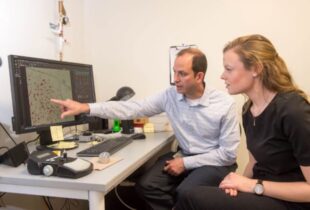
When GreenMark joined the ITP program in 2018, they had already been working with starch nanoparticles as part of a diagnostic product for the detection of early cavities. This product is now on the market as LumiCare™ Caries Detection Rinse and contains starch particles that penetrate through the porous surface and adhere to early-stage carious lesions for enhanced visualization. The ITP program has supported the development of therapeutic product based on the same foundational technology for the remineralization of caries.

Earlier activities supported by the Resource Center included characterization and optimization of starch particle compositions for remineralization of caries lesions. Together with MPWRM Resource Center and its experts, the team has developed a creative step-wise regulatory strategy and product launch plan for the therapeutic products that synergize with its diagnostic product, LumiCare™ rinse. With support from the Resource Center Market Assessment Core, the team conducted a focus group with dentists and dental hygienists to better understand the current clinical workflow in the diagnosis and treatment of non-cavitated caries, and how best to fit GreenMark products into this workflow. The focus group also explored benefits of remineralization to clinicians and their patients, as well as other drivers for making purchasing decisions and specific scientific/clinical evidence clinicians would want to see before incorporating this product into their practice.

During the ITP program, the team faced technical challenges related to product form-factor and packaging. They recognized early on that the product needed to be delivered in a dry form to prevent premature release of the mineral payload, a feature critical to its performance. A previous iteration included a gel-based formulation that could be dispersed quickly on-site for easy brush-on application. However, it was soon discovered that attaining dosing accuracy with a small individually packaged quantity of powder was difficult. This led them to innovate a novel product formulation, resulting in the development of the dissolvable dental strip.

This new innovation and the learnings from the focus group was integrated into their product development process, and in 2023, GreenMark launched CrystLCare™ Biorestorative, Fluoride-Free, a product “designed to provide immediate and long-lasting dental sensitivity relief.” The launch of this product will facilitate the continued development of the remineralization product. Up next in their stepwise approach will be the submission of the Fluoride-Plus version for FDA review and approval.

Access to world-class research facilities, state-of-the art instrumentation and dental equipment, recognized dentistry experts, and commercialization resources (through the Resource Center), have accelerated our product development in a way that traditional research grant funding cannot

GreenMark Biomedical has also been successful in raising external funds, leveraging the support from the Resource Center. To date, the team has won several SBIRs from NIH, pitch competitions, as well as the Cellerant Best of Class Technology Award. GreenMark has also been active in fundraising, securing various investments, including from the U-M’s venture investment program.

With the learnings from the other products in its armamentarium and the step-wise regulatory strategy, GreenMark is poised to conduct a pre-submission with the FDA in the next year to review the requirements for the remineralization claims for the starch nanoparticles, with a De Novo submission to follow.

It is the hope of the GreenMark team that their technologies are tools that dentists can use to find caries in their early stage, treat them non-invasively, and monitor the benefits of those treatments, thereby preventing cavitation and the need for surgical restoration. This will advance the quality of dental care, increase accessibility to patients that are limited from dental care due to fear and cost, and improve oral health outcomes, which is a future we can all smile about.