Back to Current Portfolio

Commercialization of Vital-Dent

Details

Current Phase
Phase 3 - Preclinical Development: 
Verification
Tissue Addressed
Teeth/ Dental Pulp
Technology Type
Device
Regulatory Path
510(k)

Clinical Need

Approximately 5 million procedures are performed in the USA each year to treat pulpitis of permanent teeth in the pediatric population. Children are often subject to multiple procedures because the standard of care is to stabilize the tooth until more definitive treatment can be performed when the child’s growth stops. The outcomes are unideal, because the whole tooth is not revitalized after pulp removal, resulting in tooth discoloration, loss of tooth structure, and limited (if any) tooth growth.

Solution

Vital-Dent is an acellular, resorbable hydrogel scaffold intended for revitalization of tooth pulp and maintenance of tooth vitality in immature permanent teeth treated with endodontic therapies. It is supplied as a powder in a single-use kit with sterile saline. The powder is rehydrated at the chairside using kit tools to make a clear liquid. The liquid is inserted into the instrumented canal space as would conventional sealers and sets in three minutes with a dental curing lamp to form the colorless Vital-Dent hydrogel. The tooth is then sealed with a bioceramic and restored with conventional techniques.

Competitive Advantage

Unlike current obturating materials, Vital-Dent is resorbable and promotes continued development of immature teeth, pulp revitalization and regenerative dentin, root strengthening, and long-term survival of the tooth. Vital-Dent eliminates difficulties of the only available revitalization procedure, revascularization therapy, with more consistent outcomes including root development, and a better fit with conventional clinic workflows including no phlebotomy and faster delivery.

ITP Support

Through the ITP program, biocompatibility and in vivo proof-of-concept of Vital-Dent were demonstrated. In collaboration with the Regulatory Core, design control process has been implemented, and regulatory strategy established. With the Market Assessment and Commercialization Cores, user needs and the indication for market entry were defined and a commercialization strategy, including business and funding plans, was developed.

Achievements

  • SBIR awarded to VIC Foundry, based on ITP work 

Regulatory Path

  • 510(k)

Opportunities for Partnerships

Seeking academic partnership in studies that promote adoption and advance therapy development

Key Publications & Patents

  • Zaky et al. Effect of the periapical “inflammatory plug” on dental pulp regeneration: A histologic in vivo study. J Endod 2020
  • US12,285,545 Regeneration of Vital Tooth Pulp

Meet the Team

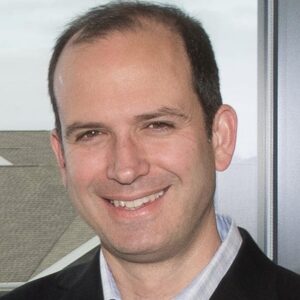
Juan Taboas, PhD

Associate Professor, University of Pittsburgh

Juan Taboas, PhD

Associate Professor, University of Pittsburgh

Dr. Juan Taboas is a multi-disciplinary scientist and an Associate Professor with the Department of Oral and Craniofacial Sciences in the School of Dental Medicine and with the Department of Biomedical Engineering in the Swanson School of Engineering.  He is also a Professor in the Clinical and Translational Science Institute.

Dr. Taboas is a biomedical engineer trained in orthopedic and dental regenerative medicine. He earned his undergraduate degree in Mechanical Engineering at the University of Miami (Florida) and earned his master’s degree in Engineering Science (Biomechanical Engineering) from Stanford University.  He then entered the PhD program at the University of Michigan, where he earned a doctorate in Biomedical Engineering and master’s in Mechanical Engineering.  He performed his postgraduate training at the National Institute of Standards and Technology (Polymers Division, NIST) and at the National Institute of Arthritis and Musculoskeletal and Skin Diseases (NIAMS, NIH).

Dr. Taboas’ passion is regenerative therapies for children and underserved communities. His laboratory develops novel hydrogel biomaterials and drug delivery to mitigate disease and regenerate tissues of the craniofacial and appendicular skeleton, particularly bone, cartilage, and tooth pulp. His team also studies pathogenesis of skeletal diseases in engineered tissue models. With these tools, they can control stem cell differentiation, tissue formation and endochondral ossification. He holds patents for microfluidic culture systems, scaffold fabrication, and regenerative therapies for disease and injury of the growth plate and teeth of children. He enjoys collaborations, having served as the principal investigator of five multi-site extramural grants funded by the NIH and DoD.

Dr. Taboas is a Senior Member of the National Academy of Inventors and a member of Tau Beta Pi, the Orthopedic Research Society (ORS), the Tissue Engineering International and Regenerative Medicine Society (TERMIS), and the American Association for Dental, Oral, and Craniofacial Research (AADOCR).  He is a grant reviewer for the National Institutes of Health (NIH) and the Department of Defense (DoD). He reviews manuscripts for several journals, including Acta Biomaterialia, Biomedical MaterialsPLOS One, and The Journal of Dental Research. He also serves as a representative of the School of Dental Medicine on the Senate of the University of Pittsburgh, the official University body for shared governance.

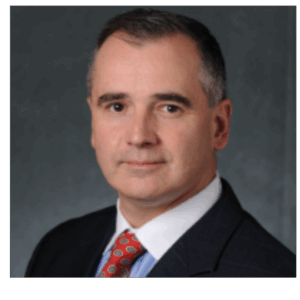
Herb Ray, DMD

Associate Professor, University of Pittsburgh

Herb Ray, DMD

Associate Professor, University of Pittsburgh

Dr. Herbert Ray received his dental degree from Temple University Dental School in 1988 and his specialty training and endodontic certificate from Temple in 1990.  Dr. Ray is a Diplomate of the American Board of Endodontics, a charter member of the American College of the American Board of Endodontics, Fellow, International College of Dentists, and Fellow, American College of Dentist.   After twenty years of private practice, Dr. Ray became the Department Chair and residency program director of the endodontic department at the University Of Pittsburgh School Of Dental Medicine. During that time Dr. Ray has trained over 50 endodontic residents, authored several peer-reviewed papers, and two book chapters.

His research in the space of dental pulp regeneration has led to several patents.   This research is ongoing through Dr. Ray’s continued appointment as an Associate Professor at the University of Pittsburgh School of Dental Medicine Department of Endodontics, Center for Craniofacial Regeneration, and the McGowan Institute for Regenerative Medicine. Dr. Ray lectures nationally on all topics related to clinical and regenerative endodontic therapy.

Dr. Ray has been actively involved with organized Dentistry having served as President of both the Dental Society of Western Pennsylvania and the Pennsylvania Dental Association.

Interviews with the Team

Juan M Taboas, PhD | Associate Professor, University of Pittsburgh

How did you get into/ what drew you to this field/ role?

I feel children are under-served in regenerative medicine. This is likely because the regulatory burden is often higher while market size smaller for pediatric devices and therapies than for adult. Yet, children stand to benefit the most from regenerative medicine because the sequalae of injury and disease are lifelong. Therefore, my laboratory has been developing hydrogel platform technologies for skeletal and craniofacial regeneration with attention to children’s needs, where continued growth is critical in wounds compromised by large injury and infection.

What excites you about your work?

The science and impact for kids are the rewarding aspects of our work. It is stimulating to work on biology and regenerative therapies for pediatric indications because children require tissues that grow. This introduces significant complexity compared to regenerative approaches for adults. The prospect of actually helping people with our work is exciting. This provides the motivation to undertake the difficult road of translation.

What advice would you give to those who are considering getting involved in translational research/ product development?

Don’t waste others’ time and money. Failure of your startup or licensed tech is not necessarily a reflection on the efficacy of your technology or entrepreneurial acumen. But only pursue what you believe works, what you would use yourself or give to your kid. Going through the motions to get entrepreneurial street cred, lines on your resume, or financial benefit is ultimately a sellout. Given 75% of medical device startups fail, choose the translation path that best assures commercialization and clinical adoption rather than personal profit.

If you weren’t in your current career, what other profession would you like to try?

I would like to be an elementary school teacher and pop kids’ minds with cool rhetorical science questions delivered The Matrix style. It would also improve my grammar.

Story

Towards a Brighter Future: From Evolution to Revolution in Pediatric Dental Regeneration with Vital-Dent

“We are trying to do whatever is possible to save the tooth first.” This comment from a parent of a child with a traumatic dental injury is what drives the team to develop a therapy to revitalize pulp and maintain teeth in children.


The hydrogel-based platform technology was originally explored for the regeneration of the bone growth plate over a decade ago in 2012. After exploring various applications for this technology, the team led by Drs. Juan Taboas and Herb Ray at the University of Pittsburgh (Pitt), is now advancing the biomaterial-based therapy to regenerate dental pulp, focusing on the pediatric population.

The current project team formally came together in 2017, through a student initiative for an i-Corps program at Pitt. Over the years, more than 12 individuals have worked on the project, advancing it at each step along the way. The project entered the ITP program in 2019, under the leadership of Dr. Taboas, an Associate Professor in the Department of Oral and Craniofacial Sciences and a biomedical scientist with a broad background in bioengineering, and Dr. Ray, former chair of the Department of Endodontics, a highly respected endodontist.

Since its entry in the program, the MPWRM Resource Center (RC) has supported the project with the aim of advancing the product to clinicals and enhancing clinical adoption. In collaboration with the Market Assessment Core, the team has conducted several rounds of in-depth interviews with endodontists to test and hone the value proposition of this biomaterial-approach, they call Vital-Dent. Through these conversations, the team came to appreciate that regenerative endodontics is still nascent relative to other dental specialties where regenerative approaches have been integrated into clinical practice, and decided to focus Vital-Dent’s initial activities on high value indications for the pediatric population. In this subset of the patient population, the current approach is often to stabilize the tooth until more definitive treatment can be performed when the child stops growing. As a result, the whole tooth is not revitalized after pulp removal, leading to tooth discoloration, loss of tooth structure, and limited (if any) tooth growth. With Vital-Dent’s ability to promote pulp revitalization and dentin regeneration, the goal is to attain long-term survival of the natural tooth structure.

The formulation of Vital-Dent has also evolved during its development in the ITP program. With input from the RC experts, the composition has gone through multiple iterations to be able to take advantage of a streamlined pathway for FDA submission. In collaboration with the Regulatory Core, the team is working on design control processes for the development of Vital-Dent, and the MPWRM Resource Center’s Quality Assurance Core conducted a visit with the investigators’ laboratory at Pitt. Together, the team developed a regulatory strategy that anticipates a 510(k) pathway, and roadmap for the submission including studies and partners with whom those studies will be conducted.

The support from and discussions with the Regulatory Core have been critical in defining the mechanism of action, key development steps, and responses to our interested investors.

The team has also leveraged various resources at its home institution. Prior to its engagement with the ITP program, the project was supported by the i-Corps program at Pitt, which enabled them to complete an initial customer discovery to explore dental applications of Vital-Dent. Subsequently, pilot studies were also supported by a program within Pitt, which became the basis of the application to the ITP program. Through the ITP program, the RC’s Commercialization Core has also been an integral part of the team in its continued advancement on the business front. Working together with the Commercialization Core, the team worked with the home institution to refine its intellectual property strategy. The Core has also supported the team’s engagement with external parties interested in this technology. In addition, with combined support from the Market Assessment Core, the RC has helped the project team prepare a presentation to Renaissance Health Service Corporation that culminated in a $100,000 research grant for the project.

With the roadmap as its guiding light, the Vital-Dent team is striving to create regenerative therapies for children, because they are underserved in tissue engineering and regenerative medicine, with the ultimate goal to save their teeth after traumatic injury and pulpitis.